THE 23RD EDITION OF TEGERNSEE INTERNATIONAL MOUNTAIN FILM FESTIVAL
Scheduled from October 14th to October 18th, the Tegernsee International Mountain Film Festival takes part every year since 2003, in Germany, among the natural beauties of Tegernsee, a lake-side town located 747 metres above sea level. We interviewed the festival’s director Tom Dauer, who told us something more about the history, the goals and the vision of this 23rd edition.
When was the festival born and what was its main goal at the time?
The first edition of the International Mountain Film Festival Tegernsee took place in 2003. The idea came from mountain film veteran Otto Guggenbichler. A native of Tegernsee, he had been making mountain films for the Bayerischer Rundfunk (Bavarian Television) since the 1950s. He believed that his hometown, situated at the foot of the Alps, could serve as an excellent setting for major films. And he was to prove right.
How did the festival grow throughout the years and what is its main goal today?
The festival has grown steadily over the years and decades. We now screen films at five venues and welcome up to 6,000 visitors over the five days of the festival. However, our main aim is not to increase the quantity but to improve the quality of the programme. Particularly at a time when technological developments are making it increasingly easy to film in the mountains, it is important to filter out, from the many productions, those that tell good stories.
How many people work at the festival? Briefly introduce some of them.
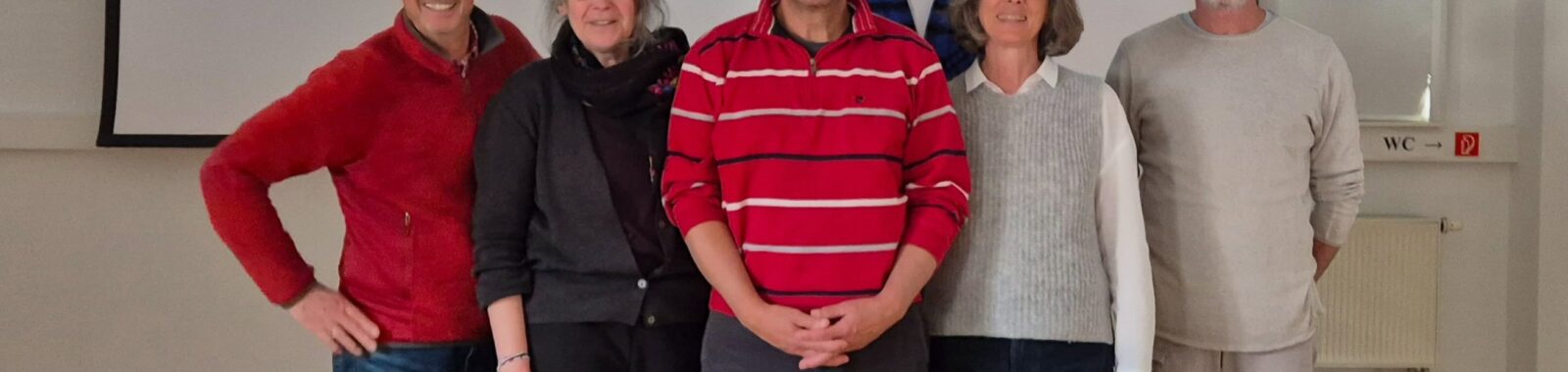
Our festival only exists because, every year, up to 150 volunteers lend a hand – whether it’s with ticket sales, organisation, screening the films, hosting the screenings or looking after our guests. My heartfelt thanks go to all these people! Two ladies work in the festival office all year round: Manuela Brandl is the heart and soul of the festival, whilst Helga Hobmeier has been with us from the very beginning and knows all the pitfalls one might encounter.
Is there a particular episode in the festival’s history that you would like to mention?
There’s a lovely anecdote that links me to my predecessor, Michael ‘Micki’ Pause, who ran the festival for 20 years. When I’d just finished my degree, he invited me to accompany him on a film shoot in the Rätikon. That was a lovely gesture, because although he knew I was a keen climber, that was all he knew. Unfortunately, right at the start of the second day’s filming, Micki was hit on the arm by a rock at the start of the climb and injured so badly that he could no longer climb. But as we only had a few long shots left to film – that is, shots from a distance – I quickly put on Micki’s jacket and helmet and stood in for him. I don’t think anyone noticed.
Why do you think it’s important for the festival to be part of the IAMF?
On the one hand, I value the exchanges I have with my colleagues all over the world, who, given their respective cultural backgrounds, may well have a completely different perspective on the mountains to my own. Sharing these perspectives is wonderful and enriching. On the other hand, I believe that the cultural practice of mountaineering is rooted in strong values such as solidarity, humanity, empathy, a willingness to help others and humility. Today, these values are at risk of being lost on an individual, societal and political level. By portraying them in an entertaining way through our programmes and films, we are simultaneously and internationally reinforcing them. That is my conviction – perhaps somewhat naïve, but nonetheless firm.
Share your dream and vision for the future of your festival and of the mountains generally speaking.
Being human means engaging with oneself and others. My hope for the festival is that it will be seen, even more so than before, as a place for meeting and exchanging ideas with like-minded people. My dream for the mountains is that, in the future too, we can preserve them as a place where people can move about freely, flourish and try new things, feel at one with nature, take risks, achieve things through their own efforts and make their own decisions – all the things that, in addition to what I mentioned at the start, are just as much a part of what it defines to be human.